
International Business: Definition, Methods, Risks and Laws
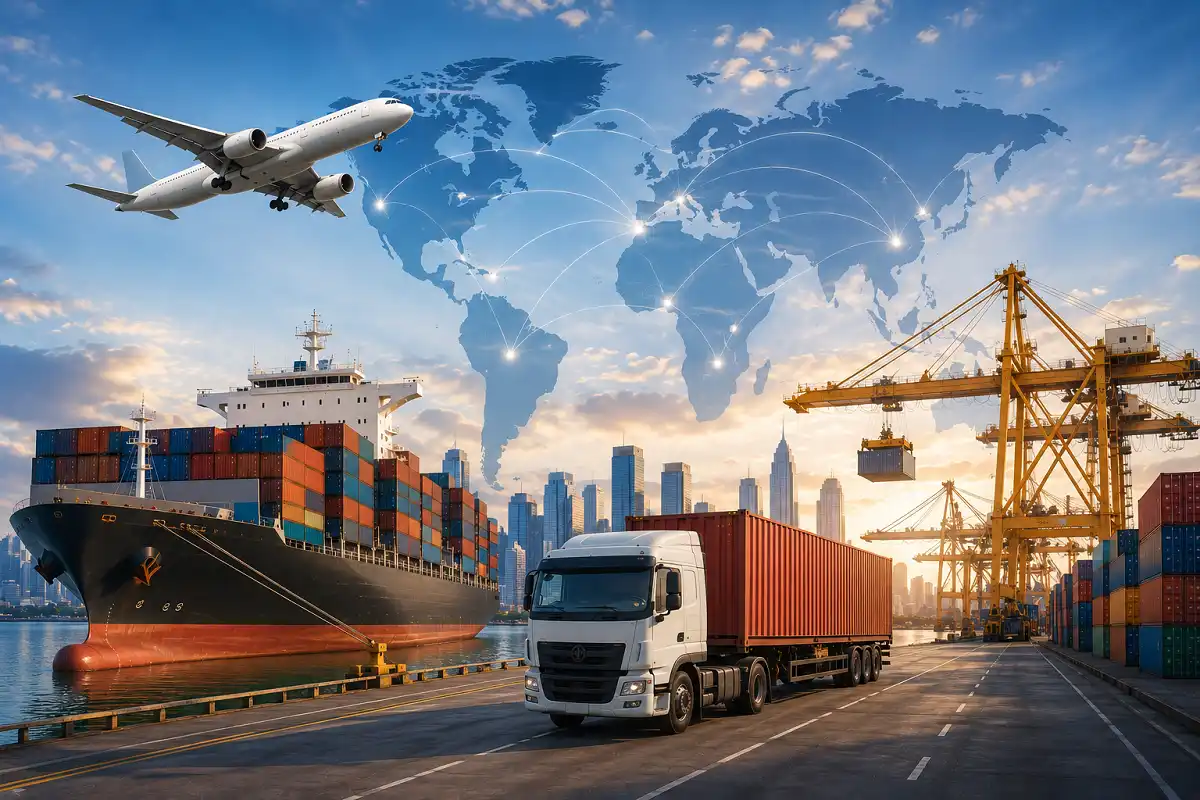
International business refers to commercial activities that involve the exchange of goods, services, technology, capital, and knowledge across the borders of different countries. It includes all business activities that promote the transfer of goods, services, and values around the world. The term is also used for businesses that operate in more than one country. This sector involves cross-border transactions between two or more countries, including economic resources such as capital, skills, and labor. These resources contribute to the global production of goods and services such as finance, banking, insurance, and construction. For this reason, international business is also called globalization. Multinational companies have to integrate separate national markets into a single global market in order to do business abroad. This process is driven by two major factors: first, the elimination of trade barriers that make free trade possible, and second, technological advances in communications, information systems, and transportation.
Evolution of terminology
The terminology used to describe international business has also changed over time. Initially, terms such as “foreign trade” and “exchange rate” were common, which presented cross-border relationships in a static way. As companies began to invest directly in foreign countries, new terminology was needed. In the mid-nineteenth century, companies began to acquire ownership and control of production facilities in different countries, which led to the term “multinational enterprise” (MNE). Multinational enterprises are companies that have access to markets, production, and operations in several countries. Among the famous examples: These include fast food companies like McDonald’s, Yum! Brands, and Starbucks; automobile companies like Ford and General Motors; electronics companies like Samsung, LG, and Sony; and energy companies like ExxonMobil and BP.
Evolution of terminology (change of words)
Over time, the words and terms associated with international business also changed. In the beginning, terms like “foreign trade” and “zaree mubadala” (foreign exchange) were used, which only denoted the old and limited way of sending goods from one country to another. But as companies started investing their own money in other countries (direct investment), new words were needed.
The Rise and Expansion of Multinational Enterprises (MNEs). In the mid-19th century (around 1850), companies began to build and operate their own factories in other countries. This led to the creation of the term “multinational enterprise” (MNE). Multinational enterprises are large companies that manufacture and sell products in multiple countries simultaneously.
Additional information about this era:
- The First MNEs: History shows that American companies such as Singer (sewing machines) and Eastman Kodak were among the first to set up actual factories outside their home country.
- Global Networks: These companies not only eliminated good shipping. Instead, they bought land abroad and hired local workers to run the proper businesses on foreign soil.
- A New Way of Investing: This era gave rise to foreign direct investment (FDI). This is when a company invests money in another country to gain full control and ownership of a business.
- The Power of Technology: Inventions like the steamship and the telegraph made it easier for these large companies to communicate with their overseas offices and move goods across the oceans more quickly.
Theoretical foundations
Canadian economist Stephen Hymer is considered one of the founders of the theory of multinational companies. He presented important ideas to explain “Foreign Direct Investment (FDI). Hymer clarified the difference between financial investment (just putting money in) and direct investment (FDI). According to him, the main difference was “control”.
- Portfolio Investment: The goal is solely to earn financial gain and profit (such as buying shares of another company).
- Direct Investment: In this, the company has complete control and ownership rights over all business operations abroad.
In later times, John Dunning’s “OLI paradigm” (Ownership, Location, Internationalization) also became a very important theoretical reference in the field. Both Hymer and Dunning are credited with establishing international business as a distinct academic and scholarly field.
Ways to enter the business
When a company decides to enter a foreign market, it has to choose one of six (6) possible methods:
- Exporting: Goods are manufactured in their own country and then shipped to be sold in other countries’ markets. The main advantage of this is that it avoids the cost of setting up a factory in another country, but the cost of transporting the goods and taxes (tariffs) can be high.
- Turnkey Projects: In this method, an independent contractor company (Contractor) completes and operates a factory or plant in another country and hands it over to the original company. (As if the plant is ready to start up as soon as you turn the key.
- Licensing: In this, a company grants another company the right to use one of its intangible assets (such as a patent, formula, or brand name) for a certain period of time, in return for a fee or royalty.
- Franchising: This is a special form of licensing. In this, the franchisee has to work according to the strict terms and business methods set by the original company (Franchisor) (such as McDonald’s or KFC outlets).
- Joint Ventures: When two or more companies come together to establish a new third company, it is called a joint venture. Usually, there is an equal partnership (50-50 Partnership) between the two companies.
- Wholly Owned Subsidiary: In this method, the company becomes the owner of 100% of the shares (shares) in a business in another country. This is done either by setting up a completely new setup or by buying an existing company there.
Factors influencing the way of entering the business
Three major strategic factors influence the way any multinational enterprise (MNE) enters a market:
- Global Concentration: Many large firms share the market with a limited number of other firms in the same industry (i.e., competition in the market is limited to a few large firms).
- Global Synergy: Successfully reusing the company’s existing resources, such as the marketing department, expertise, or brand reputation, in new markets in different countries.
- Global Strategic Objectives: Long-term reasons for entering a new market, such as expanding your business worldwide or obtaining cheap and good resources there (such as raw materials or cheap labor).
Physical-social factors
International business is influenced by many geographical and social factors, including a country’s geographical area, climatic conditions, natural resources,and population distribution. Similarly, the political policies of the government, the legal system there, the local cultural values, ,and the economic conditions of the country also have a strong influence on the performance of any company abroad.
Risks of international business
Doing business internationally comes with a number of serious risks, including poor planning without market and cultural research, leading to high costs and failure. In addition, operational, technical, and environmental risks such as poor procedures, employee errors, system failures, security issues, and pollution or noise can create resentment among local populations and hinder business operations. Furthermore, political risk from unstable or corrupt governments, violent incidents such as terrorism, and illegal practices such as bribery can severely damage a company’s reputation, assets, and consumer confidence. Last but not least, economic and financial risks, such as currency devaluation, inflation, exchange rate fluctuations, and sudden changes in fiscal and tax policies, directly affect a company’s profitability.
International laws and institutions
International business means the exchange of goods, money, and technology between different countries. It started when big companies went to other countries and set up factories and invested their money. Whenever a company wants to sell its goods in another country, it chooses routes like exporting (sending goods), franchising (using a name), or partnership. All this work is done under the rules of international organizations like the World Trade Organization (WTO). But nowadays, many changes are happening in this work, such as the rapid growth of online business (e-commerce) on the Internet, making it difficult to change the old rules.
Conclusion
International business is not just about buying and selling goods across borders, but is a complex system in which economic, political, legal, and cultural (lifestyle) factors work together. Successful multinational corporations (large companies) are only those that not only look for opportunities to make a profit, but also understand the local conditions, risks, and laws of other countries well. Due to globalization and the rapid development of technology, this sector is constantly changing and advancing over time.
For more updates, please visit my website: make1m